


Sub-Total: £0.00
Oxygenating Plants Have Been Oversold. Here’s What They Actually Do.
8 min read
Table of Contents
- How Oxygenating Plants Actually Produce Oxygen
- Do All Pond Plants Oxygenate the Water?
- What Makes a Good Oxygenating Plant?
- What Oxygenating Plants Are Actually Available?
- How Much Do Oxygenating Plants Cost, and Are They Worth It?
- Which Oxygenating Plants Should You Actually Buy?
- Will Oxygenating Plants Keep Your Pond Clear?
- One Thing That Genuinely Helps in Spring
- So Should You Buy Oxygenating Plants?
- About the Author
Yes, pond oxygenating plants work. They produce oxygen during daylight hours, support pond life, and help with nutrient balance. But they’ve been oversold for decades, marketed in a way that sets most pond keepers up for disappointment. Here’s what they genuinely do, what they don’t, and how to use them properly.
How Oxygenating Plants Actually Produce Oxygen #
All plants produce oxygen through photosynthesis, converting sunlight and carbon dioxide into energy. During daylight hours, submerged oxygenating plants are steadily releasing oxygen into the water around them.
At night, that process reverses. Plants consume oxygen as part of their normal biology, so once the light goes, the oxygen production stops completely.
This is something a lot of pond keepers don’t realise until they see the problem firsthand.
We’ve had customers come in having noticed their fish gulping at the surface first thing in the morning. The natural assumption is that the fish are hungry. In reality, the pond has run low on oxygen overnight. The plants were doing all the work during the day, and once they stopped, there was nothing to make up the difference.
If plants are your only source of oxygenation, that’s where things can go wrong.
Do All Pond Plants Oxygenate the Water? #
Technically, yes. Practically, no.
All plants produce oxygen, but not all of it ends up in the water. If a plant grows above the surface, like an iris or a pickerel weed, the oxygen is released into the air, not the pond.
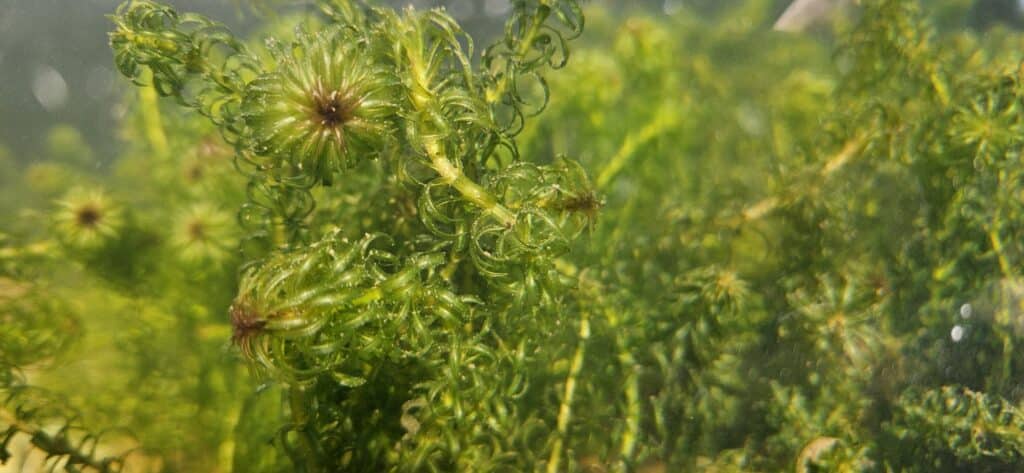
For a plant to genuinely oxygenate the water, the majority of it needs to be submerged so the oxygen can dissolve directly into the water around it.
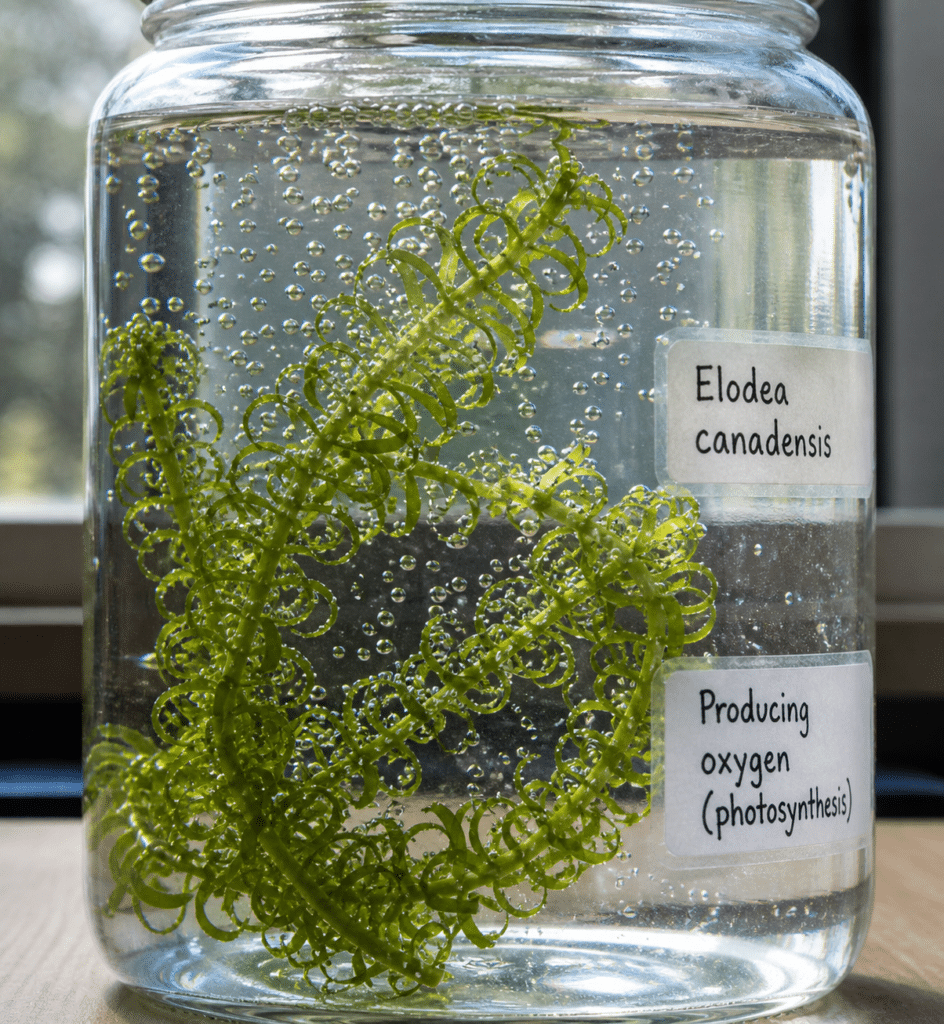
You might remember the classic school biology experiment: pondweed in a jar of water, with bubbles rising from the leaves in sunlight. That’s exactly what effective oxygenation looks like in practice.
What Makes a Good Oxygenating Plant? #
The most effective oxygenators share a few common traits: fine, feathery leaves that maximise surface area for oxygen exchange, dense underwater growth, and most, if not all, of the plant kept below the surface.
The classic example used to be Elodea crispa. It ticked every box and grew extremely well. A little too well, in fact. It spread aggressively into natural waterways and is now banned from sale in the UK.
What Oxygenating Plants Are Actually Available? #
The choice is more limited these days, but there are still good options.
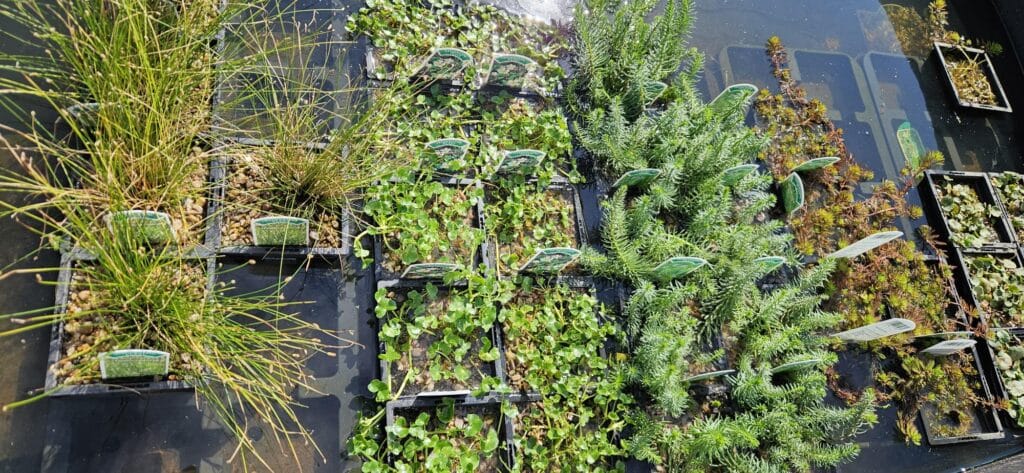
The most widely available bunched oxygenators are [Red Stem Myriophyllum] and [Elodea canadensis]. They’re slower growing and less invasive than older varieties, which is why they’re still legal to sell.
A few things are worth knowing before you buy: they can be hard to source early in the season, many are imported from Europe and availability can be patchy, and they don’t always come back reliably after a cold winter.
How Much Do Oxygenating Plants Cost, and Are They Worth It? #
This is where things have changed considerably, and it’s worth being straight with you about it.
I remember when bunched oxygenators were 99p a bunch. Back then, Elodea crispa was widely available, grew reliably even through the colder months, and was about as close to a foolproof pond plant as you could get. Once it was banned, that changed everything.
What we’re left with now are slower-growing imported varieties, and supply is patchy at best, particularly in the first half of the year. That combination of restricted supply and import costs means bunched oxygenators currently sit at around £3 to £3.50 per bunch, with some multibuy options available. Whether that changes next year, honestly, nobody knows.
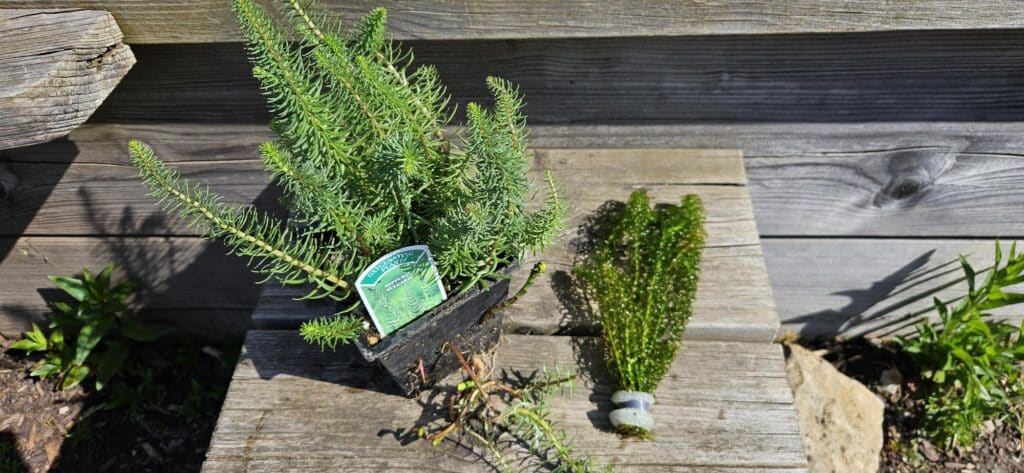
Potted oxygenators tell a different story. At around £6.50 they look more expensive at first glance, but consider what you’re actually getting. They’re UK grown, available from as early as February, and there’s easily twice the plant material compared to a typical bunch. Because they’re already well rooted, they get going straight away. There’s no waiting two weeks for them to anchor and establish.
| Bunched Oxygenators | Potted Oxygenators | |
|---|---|---|
| Typical price | £3 to £3.50 per bunch | Around £6.50 per pot |
| Plant material | One bunch | Roughly twice as much |
| Origin | Imported mainly from Europe | UK grown |
| Availability | Patchy, especially Jan to May | Available from February |
| Time to establish | 1 to 2 weeks to root | Ready to go immediately |
| Predictability | Variable year to year | More consistent |
When you look at it that way, potted oxygenators represent better value for most pond keepers, even if the price tag doesn’t immediately suggest it.
Which Oxygenating Plants Should You Actually Buy? #
If you’re asking me directly, go with potted oxygenators. Roughly one pot per square metre of surface area is a sensible starting point. They’ll almost certainly come back year on year, they won’t spread and become problematic, and you’re getting more plant for your money than a bunch at first glance suggests.
But if you’ve got your heart set on bunched oxygenators, whether it’s a particular variety you like or you’ve found a good multibuy deal, here’s a tip that gets you the best of both worlds.
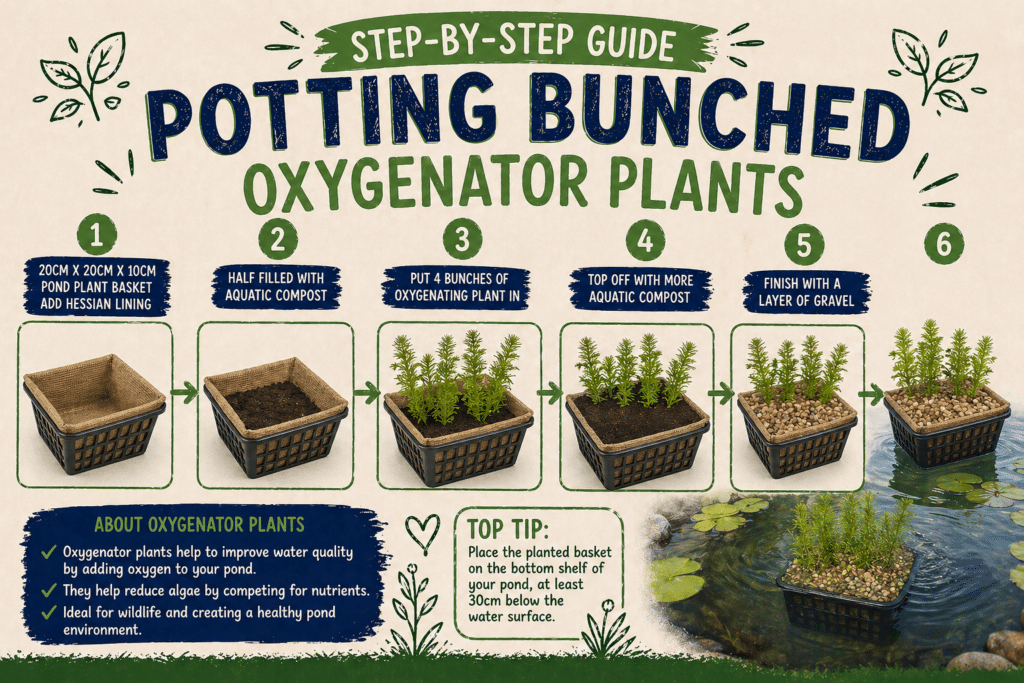
Just pot them yourself.
Get a [plant basket], line it with [hessian], add some [aquatic soil], plant your bunched oxygenators into it, and top off with gravel to keep everything in place. You’ve turned a loose bunch into a rooted, established plant that stays where you put it, comes back more reliably, and behaves itself. It takes ten minutes and costs very little extra. There’s genuinely no downside.
Will Oxygenating Plants Keep Your Pond Clear? #
No. Not on their own.
This is the most common misconception we encounter, and it’s perpetuated by well-meaning TV programmes and product packaging that oversimplify how ponds work.
We see ponds full of oxygenating plants that are green from top to bottom. The plants are growing well, but the water is still a mess. That’s because oxygenators simply aren’t efficient enough at removing nutrients to compete with algae, especially during the parts of the year when the pond is under the most pressure.
Plants are always a benefit, without exception. Even the most serious koi enthusiasts, running technically sophisticated filtration systems, use natural planting for nitrate removal. Higher plants are far more efficient at removing nutrients from the water than algae, which means they outcompete things like blanket weed for the available food source. The problem in most garden ponds is that the rate of nutrient production from fish waste far outweighs what the plants can consume. That’s why mechanical support is almost always needed alongside them.
Clear water comes from several things working together. Filtration, a healthy mix of planting, and keeping nutrient levels under control. Oxygenating plants are one part of that system, not the whole answer.
If you want to understand exactly what setup you need for genuinely clear water, and why clean water and clear water are not the same thing, that’s covered in detail in our next article: [Why Is My Pond Still Green?]
One Thing That Genuinely Helps in Spring #
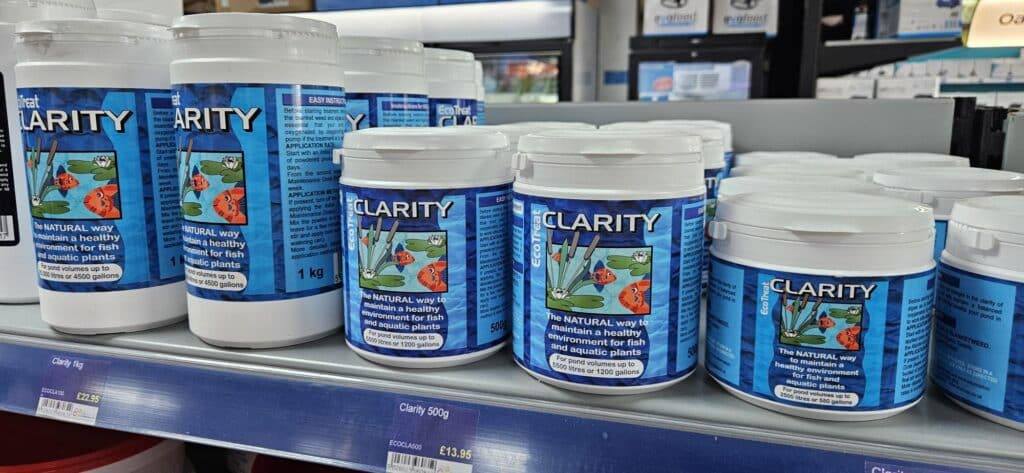
If there’s one addition that gives your plants a better chance of doing their job, particularly in those difficult early weeks of the season, it’s [Clarity by Ecotreat]
It’s a completely natural bacterial and enzyme treatment. What it does is accelerate the breakdown of the organic waste and nutrients that have built up over winter, which is exactly the problem your oxygenating plants are trying to compete with when they’re still getting established.
For a small to medium pond, you’re looking at around £9 for up to six months of support. It won’t replace good planting or filtration, but used alongside both, it helps tip things in the right direction at the time of year when your pond needs it most.
So Should You Buy Oxygenating Plants? #
Yes, without question. I’ve never advised anyone against adding plants to a pond and I’m not about to start now.
Plants are always a benefit. They support fish health, contribute to a more balanced environment, outcompete algae for nutrients, and with the right varieties you’ll get texture, colour, and the occasional flower as a bonus.
What they won’t do is carry the whole weight of water quality on their own. Used as part of a proper setup, with appropriate filtration and a little seasonal support, they’re one of the best things you can add to any pond.
Start with potted oxygenators, roughly one per square metre of surface area. Consider Clarity in early spring when your pond is under the most pressure. And if you’re not sure what filtration setup is right for your pond, come and have a conversation with us. That’s what we’re here for.
About the Author #
Richard Cook is the Managing Director of Shirley Aquatics, a family-run aquatics business that has been serving fishkeepers since 1939. A third-generation aquatic retailer with over 35 years of hands-on experience, Richard is the voice behind The Pragmatic Aquarist, known for his honest, no-nonsense approach to fishkeeping advice that helps customers make confident decisions that work in the real world, not just on paper.