


Sub-Total: £0.00
What Size Pond Filter Do I Need for My Pond?
6 min read
Table of Contents
The simple answer: take whatever figure the manufacturer quotes on the box and divide it by four. That’s your real-world capacity. A filter claiming to handle 10,000 litres will realistically manage around 2,500 litres in a typical garden pond with fish, sunlight, and normal conditions. Do that one thing and you won’t go far wrong.
Why Do You Actually Need a Pond Filter? #
First, let’s acknowledge something important. You’ve already made the right call by recognising you need a filter at all.
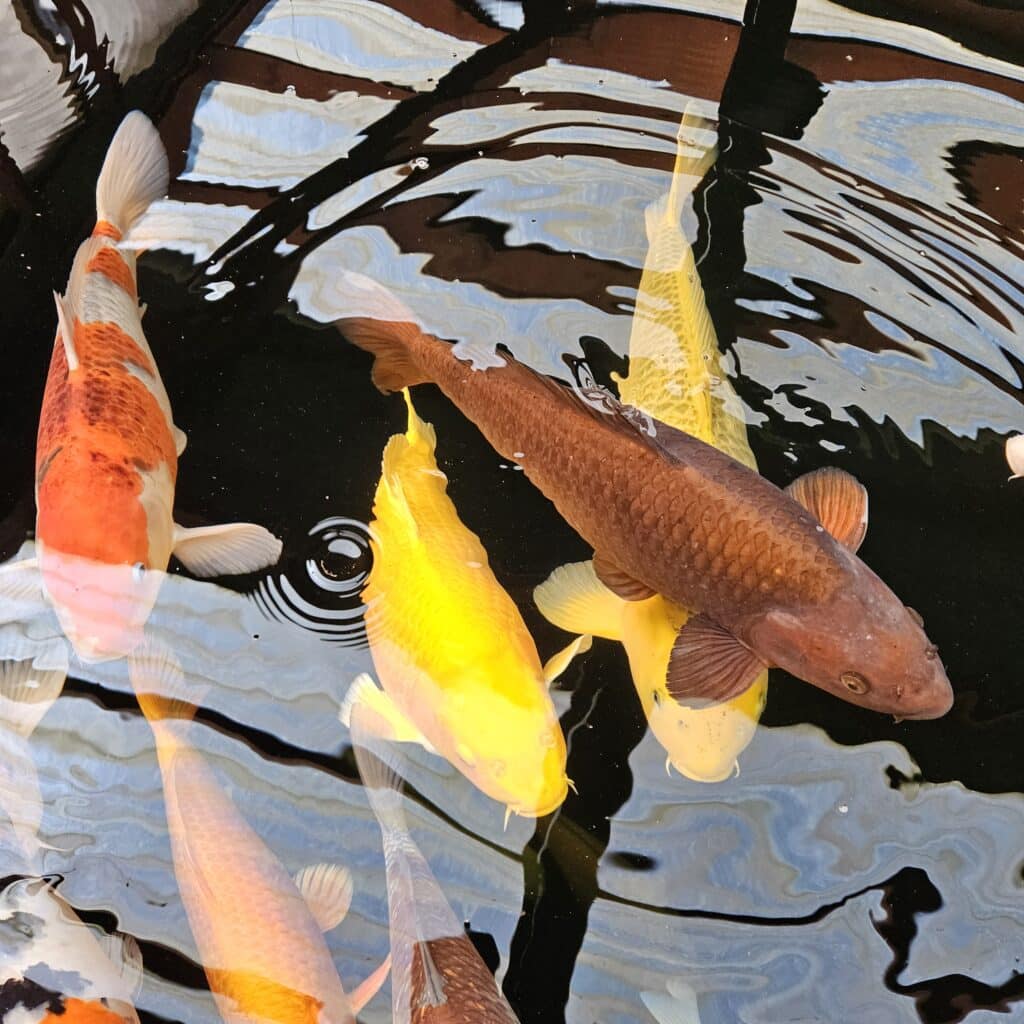
Fish don’t actually mind murky water. They’ll happily swim around in what I can only describe as “baby poop soup,” provided the water quality is safe. Water clarity is for our benefit. We spend tens, hundreds, or even thousands of pounds on fish we want to actually see, and a good filtration system is what makes that possible.
The Three Elements You Need #
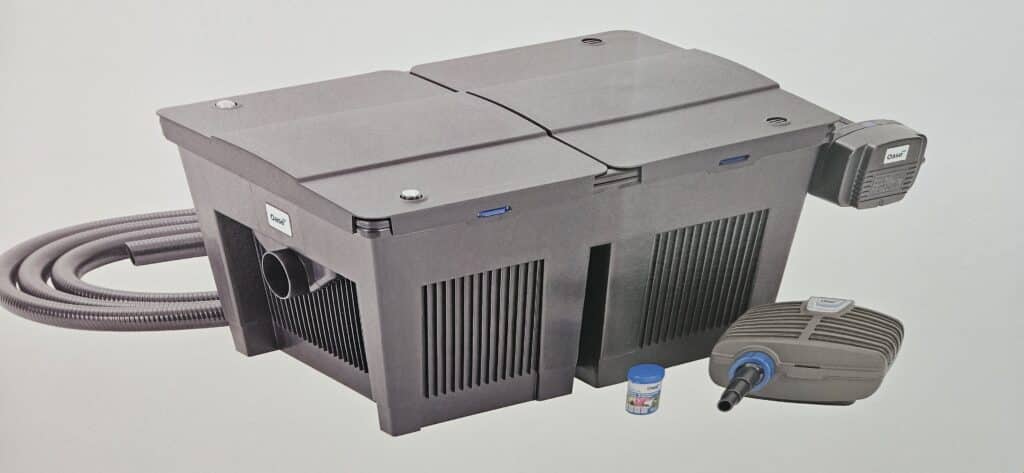
To achieve clean, clear water you need three things working together:
- A pump — the heart of the operation
- A filter — the liver
- A UV clarifier — the kidneys
You can’t have one without the others and expect proper results. The good news is that most modern filters now incorporate the UV unit, so in many cases you’re looking at just two purchases rather than three.
Why Manufacturers’ Claims Are Misleading #
This is where it gets frustrating, and where a lot of pond keepers go wrong.
Filter manufacturers, understandably, want their product to look as capable as possible on the shelf. So the headline figure on the box, 10,000 litres say, represents the absolute best-case scenario. Think of it like fuel economy figures on a car: the range quoted is what you’d achieve under perfect, controlled conditions. In everyday life, it’s a different story.
Some of the more responsible manufacturers do acknowledge this. They’ll note that their figures need adjusting for certain conditions, but those important caveats are usually tucked away on the back of the box, well away from the bold headline number.
Here’s how those real-world adjustments typically look:
| Condition | Realistic Capacity |
|---|---|
| Perfect conditions (no fish, no sun) | Full headline figure, e.g. 10,000L |
| General goldfish or garden pond | Approximately half, e.g. 5,000L |
| Koi pond or pond in full sun | Approximately a quarter, e.g. 2,500L |
So a filter marketed at 10,000 litres could realistically only be doing 2,500 litres of useful work in your koi pond on a sunny summer’s day. That’s quite a gap.
Real-World Examples — Oase FiltoСlear Range #
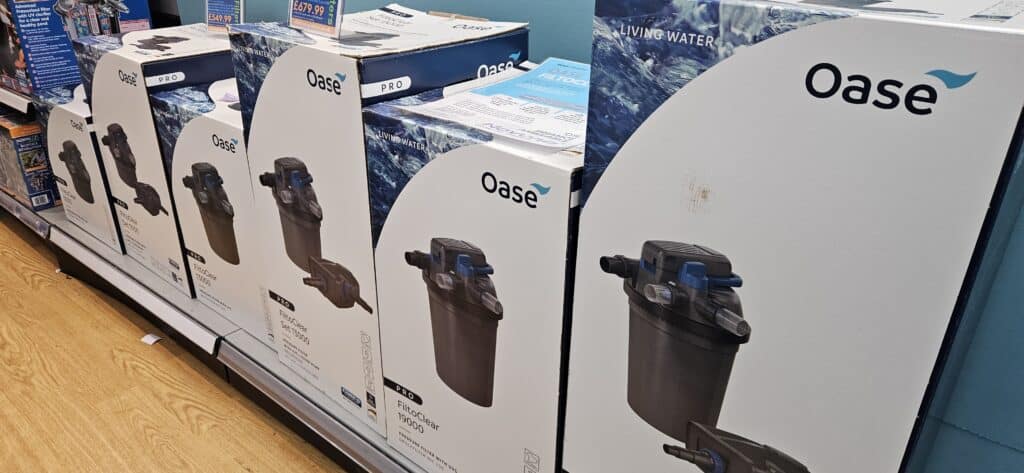
To make this practical, here’s how it works with a popular range we stock, the Oase FiltoСlear:
| Filter Model | Headline Claim | Goldfish Pond | Koi Pond / Full Sun |
|---|---|---|---|
| FiltoСlear 5000 | 5,000L | 2,500L | 1,250L |
| FiltoСlear 13000 | 13,000L | 6,500L | 3,250L |
| FiltoСlear 19000 | 19,000L | 9,500L | 4,750L |
| FiltoСlear 31000 | 31,000L | 15,500L | 7,750L |
What Should a Pond Filter Cost — and Does Price Matter? #
This is where it gets interesting, and where I want to be straight with you.
The honest answer is that I can’t give you a single figure without knowing your pond. But what I can do is show you what price differences actually mean in the real world, because that’s where the important decisions get made.
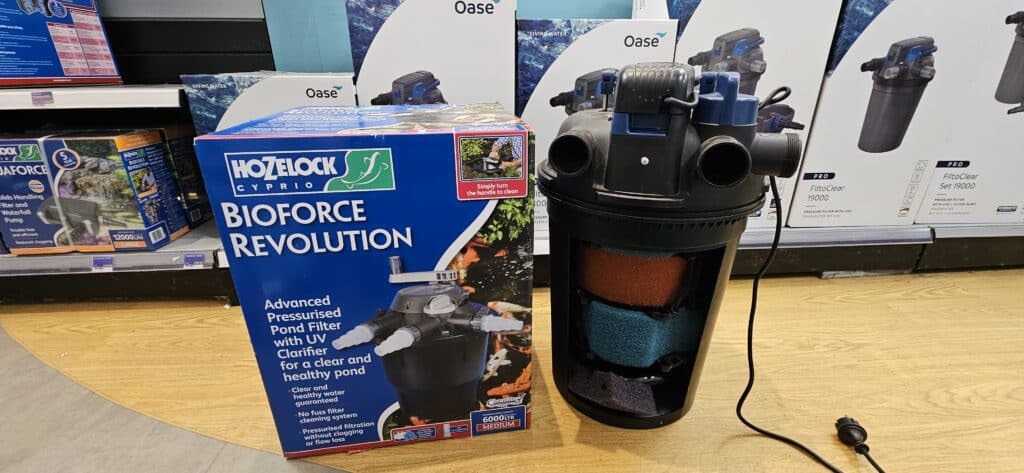
Take two popular filters for a mid-sized pond. The Hozelock BioForce Revolution 14000 and the Oase FiltoСlear 13000 are comparable on headline capacity. The difference in price between them can be as little as £40. Go down another step to something like the OASE BioPress 10000, and you’re looking at roughly £100 less again. Those are legitimate options, and I can explain exactly what you’re getting, and giving up, at each price point. The choice is yours.
But here’s where I have to draw a clear line.
The difference between a good filter and a great filter is one conversation. The difference between the right size filter and the wrong size filter is a year of misery, and then buying the right one anyway.
Consider the Oase FiltoСlear 13000 versus the FiltoСlear 19000. There’s around £110 between them. On paper, that feels significant. But if the 13000 will just about manage your pond on a good day, and the 19000 will definitely handle it, where’s the debate?
I’ve lost count of the customers who have come back to us after a year of battling an undersized filter. Too much maintenance. Chemicals added week after week trying to compensate. Water that never quite clears. And eventually, the inevitable: they’ve had to buy the right filter anyway, having already spent the money on the wrong one. It’s one of the most frustrating things I see in this trade, particularly when customers were advised to buy the undersized filter in the first place.
Buy the right size first. If you’re on the boundary between two models, go bigger. Every time.
You Need to Know Your Pond Volume #
Before you can choose the right filter, you need a reasonably accurate figure for how much water your pond holds, and this catches a lot of people out.
Over the years, I’ve had countless customers come in asking for filter advice, and when I ask how many litres their pond holds, the honest answer is often “I’m not sure.” A photo helps, but it doesn’t tell us what we really need to know.
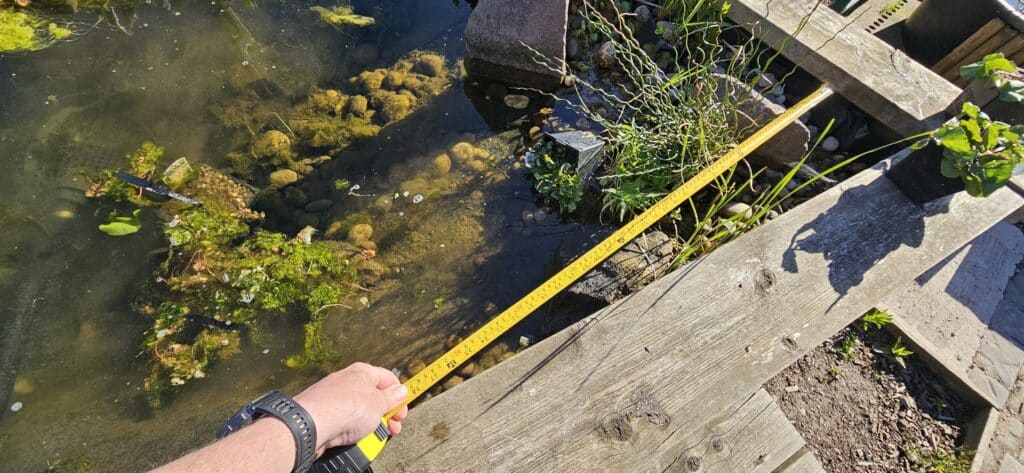
Measure your pond before you come in, or before you buy online. Length, width, and average depth will give us what we need. Use the pond volume calculator below and you’ll have your figure in seconds.
htmlPond volume calculator #
Pond volume
—
litres
Goldfish pond — filter rated at least
—
litres (headline capacity)
Koi pond / full sun — filter rated at least
—
litres (headline capacity)
Tip: average depth is usually around 60% of your maximum depth. If unsure, measure at three points and divide by three.
The Pragmatic Summary #
- Quarter the manufacturer’s headline figure to get your real-world capacity
- Know your pond volume before you shop
- Factor in your fish load and whether your pond gets full sun
- The pump, filter, and UV must work together. You can’t compromise on any one of them
- Price differences between brands are worth discussing. We’re happy to walk you through what you get at each level
- If in doubt, go bigger. An undersized filter costs you far more in the long run than the money you saved buying it
Come in and talk to us before you buy. That conversation costs nothing. Getting the wrong filter costs a great deal more.

About the Author
Richard Cook is the Managing Director of Shirley Aquatics, a family-run aquatics business that has been serving fishkeepers since 1939. A third-generation aquatic retailer with over 35 years of hands-on experience, Richard is the voice behind The Pragmatic Aquarist, known for his honest, no-nonsense approach to fishkeeping advice that helps customers make confident decisions that work in the real world, not just on paper.


