

Sub-Total: £0.00
Heads up! Livestock sells out quickly — please give us a quick call before visiting to check availability.

Panda Corydora
Price range: £7.09 through £24.79
- Scientific name: Hoplisoma panda
- Common name: Panda Corydora / Panda Cory
- Origin: Peru, South America
- Adult size: Approx. 4–5cm
- Temperature: 20–25°C
- pH: Approx. 6.0–7.5
- Temperament: Peaceful and social
- Group size: Keep 6+
- Diet: Omnivore
- Aquarium level: Bottom
- Substrate: Soft sand preferred
- Care level: Easy
- Purchase size: Approx. 2.5–3cm
Description
Panda Corydora – Hoplisoma panda
The Panda Corydora (Hoplisoma panda) is a small, peaceful catfish named for its distinctive black and cream markings. Dark patches around the eyes, dorsal fin and base of the tail contrast beautifully against the pale body, giving this popular little Cory its unmistakable appearance.
Panda Corys are highly social fish and should always be kept in a group of at least six, rather than singly or in pairs. Given the right conditions, a group will spend much of the day busily exploring the bottom of the aquarium together.
Unlike some tropical catfish, Panda Corys appreciate slightly cooler conditions, making them particularly well suited to peaceful community aquariums maintained around the low to mid-20s Celsius.
Set Up
A soft sand substrate is strongly recommended for Panda Corys. They naturally spend a great deal of time searching through the substrate for food, often pushing their snouts into the sand and sifting through it with their barbels.
Provide plenty of open floor space for foraging alongside areas of cover created with bogwood, smooth rocks and plants. Shaded areas and sheltered resting places are appreciated, particularly when the fish are first introduced.
Good water quality is important. The substrate should be kept clean and the aquarium maintained with regular partial water changes, as Corys don’t thrive over heavily contaminated substrate.
Panda Corys are comfortable at around 20–25°C and aren’t the best choice for aquariums permanently maintained at the very warm temperatures required by species such as Discus or German Rams.
Panda Cory Behaviour
Panda Corys are peaceful, sociable and active bottom dwellers.
They should be kept in groups of six or more, although a larger group can produce even more confident and natural behaviour where aquarium size permits.
You’ll often see them resting together before suddenly setting off across the aquarium as a group to investigate the substrate.
Like other Corys, Panda Corys will occasionally dart to the surface to gulp air before returning to the bottom. This is normal behaviour, although unusually frequent surface visits can be worth investigating as a possible sign of poor water quality or low dissolved oxygen.
Tank Mates
Panda Corys are excellent community fish and can be kept alongside a wide range of small, peaceful species that enjoy similar temperatures.
Suitable companions can include many smaller tetras, rasboras, peaceful barbs and other non-aggressive community fish.
Avoid large or aggressive species that may intimidate or prey upon them, along with fish requiring consistently high temperatures.
They are completely peaceful towards their own kind, and keeping a proper group is much more important than trying to add several different Cory species in small numbers.
Feeding
Panda Corydoras are omnivores and should receive a varied diet.
A good-quality sinking catfish pellet or tablet makes an excellent staple, supplemented with frozen or live foods such as bloodworm, brineshrimp and daphnia.
Although they will happily pick up food that reaches the aquarium floor, Panda Corys shouldn’t be treated as a clean-up crew expected to survive on leftovers. Make sure enough food reaches the bottom for the entire group to feed properly.
If you have any questions about keeping these fish, please contact us and a member of our friendly store team will be more than happy to offer advice on best practice.
Why not check out our Instagram for the latest news on our products and livestock!
Additional information
| Quantity | x1, x2, x4 |
|---|
Related products
-

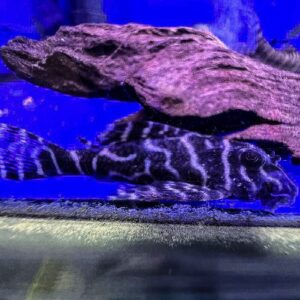
Cracked Zebra Pleco L236
£129.99 Read more -
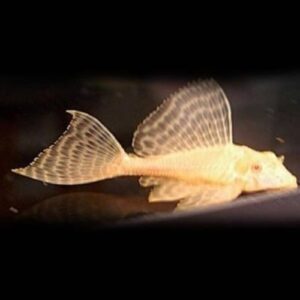
Albino Gibbiceps Pleco
£9.99 Read more -
Albino Longfin Bristlenose Pleco
Price range: £12.99 through £20.00 Select options This product has multiple variants. The options may be chosen on the product page -
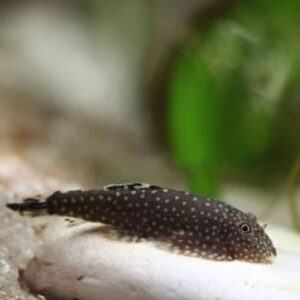
Spotted Hillstream Loach
Price range: £13.99 through £26.02 Select options This product has multiple variants. The options may be chosen on the product page