

Sub-Total: £0.00
Heads up! Livestock sells out quickly — please give us a quick call before visiting to check availability.
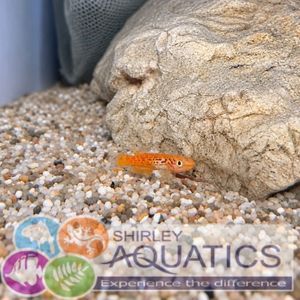
Australe Killifish
Price range: £7.59 through £50.43
Scientific Name: Aphyosemion australe
Common Name: Australe Killifish / Lyretail Killifish
Adult Size: Up to approximately 6cm
Minimum Aquarium: 60cm length recommended
Temperature: 21–24°C
pH: 6.0–7.0
Hardness: 5–12 dH
Temperament: Peaceful; males may display and chase
Diet: Predominantly carnivorous/insectivorous; quality dry, live and frozen foods
Swimming Level: Primarily middle to upper areas
Difficulty: Easy–Intermediate
Suitable For: Peaceful cooler tropical communities or species-focused planted aquariums
Approximate Purchase Size: 3-4cm
Description
Australe Killifish (Aphyosemion australe)
The Australe Killifish (Aphyosemion australe), sometimes known as the Lyretail Killifish or Cape Lopez Lyretail, is a beautifully coloured little West African killifish and an excellent introduction to this fascinating group of fish.
Males are particularly attractive, developing much stronger colouration and beautifully extended fins as they mature. Several colour forms are kept in the aquarium hobby, including the striking orange/gold form, while females are generally smaller and much more subtly coloured.
Unlike the annual killifish that inhabit temporary pools and have evolved exceptionally short life cycles, Australe Killifish are non-annual. They don’t require their eggs to undergo a dry period and can be maintained much more like conventional aquarium fish, making them one of the more approachable killifish for aquarists wanting to try something a little different.
Australe Killifish Aquarium Setup
Australe Killifish appreciate a mature, well-planted aquarium with plenty of cover. Floating plants are particularly useful, providing shaded areas beneath which the fish can feel secure, while mosses, fine-leaved plants, wood and leaf litter can all help create the more sheltered environment they prefer.
They are not especially demanding in terms of space, but we would recommend an aquarium of around 60cm in length for a small group or community setup.
Water movement should be relatively gentle rather than excessively strong. They are much better suited to a calm, heavily planted aquarium than a high-flow setup designed for riverine species.
A secure lid is essential. Killifish are remarkably accomplished jumpers and can escape through surprisingly small openings around aquarium lids and equipment.
Temperature and Water Conditions
One particularly important consideration with Australe Killifish is temperature.
Although commonly sold as tropical fish, they don’t require the high temperatures associated with species such as Rams or Discus. Around 21–24°C is an excellent range for Aphyosemion australe, making them particularly well suited to cooler tropical aquariums.
They naturally favour relatively soft, slightly acidic to neutral water. FishBase records a pH range of approximately 6.0–7.0 and hardness of 5–12 dH.
As with most aquarium fish, stability and good water quality are more important than continually attempting to adjust the water to achieve an exact number.
Behaviour
Australe Killifish are generally peaceful fish, but they aren’t quite the same socially as conventional shoaling species.
Males will display towards one another and some chasing can occur, particularly where several males are competing for females. Providing plenty of plants and visual barriers gives subordinate fish somewhere to retreat and makes keeping a small group considerably easier.
They can initially be rather shy, especially when introduced to a brightly lit or sparsely decorated aquarium. Once settled into a planted tank where they feel secure, however, they become much more confident and you’ll often see the males displaying their fins and colouration.
Their relatively calm nature also means we wouldn’t recommend combining them with particularly boisterous or aggressive species.
Tank Mates
Australe Killifish can work very well in a carefully chosen peaceful community aquarium, particularly one maintained towards the cooler end of tropical temperatures.
Small peaceful tetras and rasboras, smaller Corydoras, peaceful dwarf cichlids with compatible temperature requirements and other similarly gentle species can all potentially make suitable companions.
Very active or aggressive fish are best avoided, as are substantially larger species capable of viewing an adult killifish as food.
It’s also worth remembering that these fish only reach around 6cm.
Feeding
In nature, Aphyosemion australe feeds predominantly on small animal prey including worms, crustaceans and insects.
Aquarium specimens can usually be encouraged to accept good-quality dry foods, but they really benefit from regular live and frozen foods.
Live or frozen brineshrimp, daphnia, mosquito larvae, small bloodworm and similar foods are excellent choices. Live foods are particularly useful for bringing fish into breeding condition and encouraging the natural hunting behaviour that makes killifish so interesting to keep.
Why We Recommend Australe Killifish
Australe Killifish are one of those species we think deserves considerably more attention in the aquarium hobby.
They stay relatively small, don’t require an enormous aquarium and the mature males can develop absolutely superb colouration. They’re also an excellent choice for somebody who has always been interested in killifish but has been put off by the specialist breeding methods associated with some annual species.
We particularly like them for cooler, heavily planted tropical aquariums, where their requirements can actually make them a better choice than many of the more commonly available tropical fish.
Give them plenty of cover, gentle water movement, suitable peaceful companions and a varied diet containing live or frozen foods and they can make a fascinating alternative to the usual community species.
Just don’t forget the lid!
Frequently Asked Questions
Are Australe Killifish peaceful?
Generally, yes. They are peaceful towards most suitable community fish, although males may display and chase one another.
A planted aquarium with plenty of cover and broken lines of sight helps prevent any one fish from being continually harassed.
Can Australe Killifish live in a community aquarium?
Yes, providing their tank mates are peaceful and have similar requirements.
We would avoid very boisterous species, aggressive fish and fish requiring substantially warmer water.
Do Australe Killifish need to be kept in groups?
They aren’t shoaling fish in the same sense as tetras or rasboras. They can be maintained as a pair or small group, although sufficient cover should be provided when keeping multiple males.
Are Australe Killifish difficult to keep?
Not particularly, and Aphyosemion australe is one of the species we would consider for somebody keeping killifish for the first time.
Their most important requirements are good water quality, appropriate temperatures, plenty of cover and a tightly covered aquarium to prevent them jumping out.
Are Australe Killifish annual killifish?
No. Aphyosemion australe is a non-annual killifish.
This means their eggs don’t require the dry incubation period associated with annual species whose natural habitats disappear seasonally.
What do Australe Killifish eat?
They are predominantly carnivorous/insectivorous fish. Wild fish feed on small worms, crustaceans and insects.
Aquarium fish should be offered a varied diet, with live and frozen foods such as brineshrimp, daphnia, mosquito larvae and suitably sized bloodworm being particularly useful.
Why are my Australe Killifish hiding?
Some individuals can be shy when newly introduced, particularly in brightly lit aquariums without much cover.
Adding floating plants, dense planting and other sheltered areas usually helps them feel secure enough to spend more time out in the open.
If you have any questions about keeping the MacCulloch’s Rainbowfish, please contact us and a member of our team will be able to advise you.
Why not check out our photos of some of the best livestock we’ve had in store over the years!
Additional information
| Multibuy | 2 For, 4 For, 8 For, Each |
|---|
Related products
-
Sale!

Neon Tetra
Price range: £1.19 through £90.19 Select options This product has multiple variants. The options may be chosen on the product page -
Assorted Discus
Price range: £61.99 through £110.00 Select options This product has multiple variants. The options may be chosen on the product page -
Electric Blue Ram
Price range: £10.99 through £38.43 Select options This product has multiple variants. The options may be chosen on the product page -
Bristlenose Catfish
Price range: £7.19 through £47.77 Select options This product has multiple variants. The options may be chosen on the product page