

Sub-Total: £0.00
Heads up! Livestock sells out quickly — please give us a quick call before visiting to check availability.
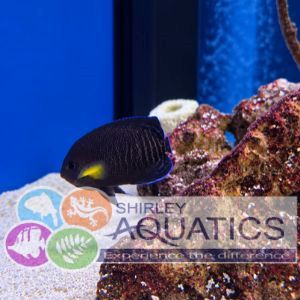
Yellowfin Angel
£26.99
Scientific name: Centropyge flavipectoralis
Common name: Yellowfin Angelfish / Moonbeam Angelfish
Maximum size: Approximately 10cm
Minimum aquarium: 250 litres recommended
Temperature: 23–27°C
pH: 8.1–8.4
Specific gravity: 1.023–1.026
Temperament: Semi-aggressive / territorial
Diet: Omnivore
Reef safe: With caution
Care level: Intermediate
Origin: Indian Ocean
Best kept: Singly in a mature marine aquarium
Available on backorder
Description
Yellowfin Angelfish
The Yellowfin Angelfish (Centropyge flavipectoralis) is an attractive dwarf marine angelfish with a dark brown to almost black body, subtle metallic blue markings and distinctive golden-yellow pectoral fins.
Native to the Indian Ocean, this relatively uncommon species is found around rocky reefs and coral rubble, where it spends much of its time grazing and exploring sheltered areas.
Reaching approximately 10cm, it remains considerably smaller than many marine angelfish. However, its territorial personality means it still requires a spacious, established aquarium with plenty of rockwork.
Yellowfin Angelfish Set Up
A mature marine aquarium of at least 250 litres is recommended, with larger systems preferable.
Provide plenty of established live rock arranged into caves, crevices and overhangs. These offer security while also providing natural grazing surfaces.
Leave open swimming areas between the rockwork and ensure good water movement, filtration and oxygenation.
This species is best introduced to a well-established aquarium rather than a newly set-up marine system.
Yellowfin Angelfish Behaviour
Like many dwarf angelfish, this species is active, inquisitive and occasionally territorial.
Newly introduced specimens may initially remain close to sheltered areas before becoming more confident.
Once established, they spend much of their time investigating rockwork and defending preferred territories.
We recommend keeping a single specimen in most home aquariums, particularly where other dwarf angelfish are present.
Tank Mates
Suitable companions include moderately confident marine fish such as clownfish, wrasses, suitably sized gobies and other peaceful to semi-aggressive species.
Avoid housing it with other Centropyge angelfish unless the aquarium is exceptionally spacious and the keeper has experience managing territorial behaviour.
Very timid fish may also struggle alongside a particularly assertive individual.
Feeding
This dwarf angelfish is an omnivore that naturally grazes on algae and small marine invertebrates.
A varied diet should include:
-
Marine algae and dried seaweed
-
Spirulina-based foods
-
Specialist marine angelfish preparations
-
Frozen mysis shrimp
-
Enriched brineshrimp
-
Quality marine pellets and flakes
Offer small meals several times daily, particularly during the settling-in period.
Established rockwork provides additional opportunities for natural grazing.
Is the Yellowfin Angelfish Reef Safe?
Reef safe with caution.
Some individuals can be maintained successfully in reef aquariums, but others may nip at soft corals, fleshy LPS corals, zoanthids and clam mantles.
As with other dwarf angelfish, behaviour varies between specimens, and compatibility with corals cannot be guaranteed.
A fish-only aquarium with live rock is the safest choice where coral damage would be unacceptable.
Water Parameters
Temperature: 23–27°C pH: 8.1–8.4 Specific gravity: 1.023–1.026 Alkalinity: Approximately 8–12 dKH
Stable water chemistry and careful acclimatisation are important for long-term health.
Care Level
Intermediate
Once established, this species is generally considered reasonably hardy and will usually accept a varied marine diet.
Its territorial nature, feeding requirements and uncertain coral compatibility make it better suited to aquarists with some marine experience.
With suitable surroundings and carefully chosen tank mates, it can become a fascinating addition to a mature marine aquarium.
This species is strictly for marine aquariums and must not be kept in freshwater (tropical or coldwater) or terrestrial environments, as they will not survive outside of saltwater conditions.
If you have any questions about keeping this fish , please contact us and a member of our friendly store team will be more than happy to answer all of your questions and advise on best practice.
Why not check out our Instagram for the latest news on our products and livestock!