

Sub-Total: £0.00
Heads up! Livestock sells out quickly — please give us a quick call before visiting to check availability.
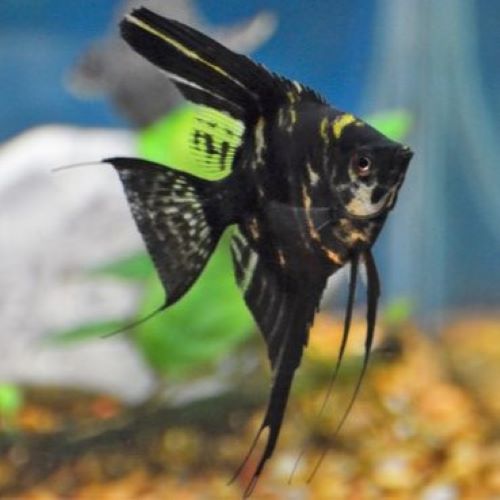
Marble Angelfish
Price range: £4.29 through £106.17
- Scientific name: Pterophyllum scalare
- Common name: Marble Angelfish
- Origin: South America (captive-bred colour variety)
- Maximum size: Approximately 15cm body length; 20cm+ overall height
- Purchase size: Approximately 4–5cm
- Minimum aquarium: Approximately 200 litres for a compatible adult pair; 50cm+ usable water height
- Temperature: 24–30°C
- pH: 6.0–8.0; slightly acidic to neutral preferred
- Water hardness: Soft to moderately hard preferred
- Temperament: Generally peaceful; territorial when breeding
- Diet: Omnivore – flakes, pellets, frozen and live foods
- Care level: Easy to moderate
- Social requirements: Compatible pairs or groups in suitably large aquariums
- Compatibility: Peaceful community fish too large to be eaten
- Special features: Unique black, silver and white marbled patterns with elegant, flowing fins
Description
Marble Angelfish (Pterophyllum scalare)
The Marble Angelfish (Pterophyllum scalare) is a beautiful variety of freshwater angelfish, admired for its striking black, silver and white marbled markings. Its elegant, triangular body and graceful fins make it a stunning centrepiece for larger tropical aquariums.
Unlike the familiar striped Common Angelfish, this selectively bred variety displays irregular patches and patterns, giving each fish its own distinctive appearance. No two Marble Angelfish look exactly alike, making them particularly appealing to fishkeepers who appreciate individual colour variations.
Marble Angelfish – Appearance and Behaviour
Marble Angelfish have the characteristic tall, flattened body of the angelfish family, with extended dorsal and anal fins and two delicate, thread-like pelvic fins.
Their colouring varies considerably, with some individuals displaying bold black markings against a silver background, while others feature intricate patterns of black, grey and white.
Although generally peaceful for cichlids, angelfish develop a social hierarchy and can become territorial as they mature, particularly when breeding pairs form.
Young angelfish are naturally social and often swim together in loose groups. In sufficiently large aquariums, groups can develop fascinating interactions and natural behaviours.
However, established pairs may defend their chosen territory, so providing adequate space and visual barriers is important.
Aquarium Requirements
Angelfish originate from the slow-moving rivers and flooded forest habitats of South America, where submerged roots, branches and tall vegetation provide shelter.
A mature aquarium of approximately 200 litres or more, with at least 50cm of usable water height, is recommended for a compatible adult pair. Larger aquariums are needed for groups.
Height is particularly important because adult angelfish can reach approximately 15cm in body length and exceed 20cm in overall height when their fins are fully extended.
Tall plants such as Amazon Swords and Vallisneria make excellent additions, while driftwood and other decorations can provide shelter and help establish separate territories.
Leave sufficient open swimming space so the fish can move comfortably without damaging their delicate fins.
These fish prefer warm, stable water, ideally soft to moderately hard and slightly acidic to neutral. Captive-bred specimens are generally adaptable, provided changes in water chemistry are gradual.
Gentle to moderate filtration and regular partial water changes will help maintain excellent water quality.
Suitable Tank Mates
Marble Angelfish can make excellent community fish when housed with carefully selected companions.
Suitable tank mates include:
- Larger peaceful tetras
- Corydoras catfish suited to warmer water
- Bristlenose Plecos
- Peaceful medium-sized rasboras
- Other suitably sized, non-aggressive community fish
Although angelfish are generally peaceful, they are still cichlids and may eat very small fish that fit into their mouths.
Tiny tetras, small rasboras and young livebearers may therefore be unsuitable companions for fully grown specimens.
Avoid persistent fin-nippers, aggressive cichlids and fish likely to harass their long fins.
Marble Angelfish Feeding and Diet
Marble Angelfish are omnivores and readily accept a varied aquarium diet.
Suitable foods include:
- Quality tropical flakes
- Cichlid granules and pellets
- Frozen bloodworm
- Frozen brineshrimp
- Frozen mysis shrimp
- Suitable live foods
A varied diet helps maintain their health, condition and beautiful colouring.
Offer appropriately sized portions once or twice daily, avoiding overfeeding.
A Beautiful Aquarium Centrepiece
With their distinctive marbled markings, graceful swimming style and engaging personalities, these beautiful angelfish make an impressive addition to larger tropical aquariums.
Their individual patterns ensure that every specimen has its own appearance, while their fascinating social behaviour provides plenty of interest.
Given sufficient space, suitable companions and stable water conditions, Marble Angelfish can become a magnificent centrepiece for an established tropical community.
If you have any questions about keeping this fish, please contact us and a member of our friendly store team will be more than happy to answer all of your questions
Why not check out our Instagram for the latest news on our products and livestock!
Additional information
| Multibuy | 16 For, 2 For, 32 For, 4 For, 8 For, Each |
|---|
You may also like…
-

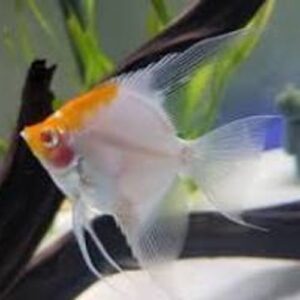
Albino Koi Red Cap Angelfish Medium
Price range: £24.99 through £45.00 Select options This product has multiple variants. The options may be chosen on the product page -
Tricolour Angelfish
Price range: £4.99 through £9.50 Select options This product has multiple variants. The options may be chosen on the product page -
Diamond Veiltail Angelfish
Price range: £6.99 through £12.00 Select options This product has multiple variants. The options may be chosen on the product page
Related products
-
Assorted Discus
Price range: £61.99 through £110.00 Select options This product has multiple variants. The options may be chosen on the product page -
Sale!
Assorted Betta Double Tail
Original price was: £19.99.£18.99Current price is: £18.99. Read more -
Bristlenose Catfish
Price range: £7.19 through £47.77 Select options This product has multiple variants. The options may be chosen on the product page -
Red Oscar 5-6cm
Price range: £12.49 through £43.68 Select options This product has multiple variants. The options may be chosen on the product page