

Sub-Total: £0.00
Heads up! Livestock sells out quickly — please give us a quick call before visiting to check availability.

Firemouth Cichlid
Price range: £5.39 through £18.85
Care level: Easy
Max Size: 25cm
Temp: 24-30°C
PH: 6.8 – 8.0
Approximate purchase size: 5-6cm
Diet: Omnivore
Compatibility: Community
Description
Firemouth Cichlid – Thorichthys meeki
The Firemouth Cichlid (Thorichthys meeki) is a colourful Central American cichlid best known for the brilliant red-orange colour that develops around the throat and underside of mature fish. Their silvery body, dark lateral markings and flashes of blue through the fins give them plenty of character even when they aren’t displaying.
The name comes from one of their most impressive behaviours. When threatened or displaying to a rival, a Firemouth can flare its gill covers and expose its brightly coloured throat, making itself appear considerably larger and more intimidating.
Despite the theatrics, Firemouths are generally more manageable than many larger Central American cichlids and can make an excellent introduction to keeping medium-sized cichlids.
Set Up
We recommend an aquarium of at least 90cm in length, although a larger tank is preferable for a pair or when keeping them with other fish.
A sand or fine gravel substrate is ideal, as Firemouths naturally spend time investigating and sifting through the bottom of the aquarium. Rocks, wood and caves can be used to provide territories and sheltered areas, while leaving plenty of open swimming space.
Plants can be included, although rooted specimens should be well established or protected from digging. Tough plants attached to wood or rocks are particularly useful.
Good filtration is important, but excessively powerful water movement isn’t necessary.
Behaviour
Firemouth Cichlids are territorial, particularly once mature or when breeding, but they are not usually relentless aggressors.
Much of their territorial behaviour involves displaying rather than immediately fighting. A threatened fish may spread its fins, flare its gill covers and expose the fiery colour underneath its throat.
Pairs become considerably more defensive when spawning and will protect their chosen territory from other fish.
Their temperament makes them fascinating to watch, and established Firemouths can become surprisingly confident and responsive to their keeper.
Tank Mates
Firemouths can be kept with other appropriately sized fish in a sufficiently spacious aquarium.
Potential companions include robust medium-sized barbs, larger tetras, suitable catfish and carefully chosen cichlids of a similar temperament. Tank mates should be confident enough to cope with occasional territorial displays without being excessively aggressive themselves.
Very small, timid or delicate species are best avoided.
As with most cichlids, behaviour can change considerably when a pair forms, so additional space and plenty of visual barriers are particularly important in a mixed aquarium.
Feeding
Firemouth Cichlids are omnivorous and usually very easy to feed.
A good-quality cichlid pellet or flake can form the staple diet, supplemented with a varied selection of foods such as brineshrimp, mysis, bloodworm, daphnia and krill, along with suitable vegetable-based foods.
Offering a varied diet helps maintain good condition and encourages their best natural colouration.
Frequently Asked Questions
How big do Firemouth Cichlids grow?
Adults generally reach around 12–15cm, with males typically becoming larger and developing more extended fins than females.
What temperature should Firemouth Cichlids be kept at?
A temperature of approximately 23–27°C suits them well.
Are Firemouth Cichlids aggressive?
They are territorial rather than relentlessly aggressive. Displays and chasing are common, particularly between cichlids, and aggression becomes more pronounced when a pair is breeding.
Can Firemouth Cichlids live in a community aquarium?
Yes, but not a conventional community of small, delicate fish. They are better suited to a spacious aquarium containing similarly robust species that won’t be intimidated by their territorial behaviour.
Can you keep more than one Firemouth?
Yes, but sufficient space is important. A compatible pair can live together successfully, while groups require considerably more room so individual fish can establish their own territories.
Do Firemouth Cichlids dig?
Yes. Firemouths naturally investigate and sift through the substrate and may dig more enthusiastically when preparing a spawning site. A sand or smooth fine substrate is therefore an excellent choice.
Why isn’t my Firemouth very red?
Colour varies according to age, sex, individual genetics and condition. Juveniles in particular can look quite subdued compared with mature adults. The intense red throat becomes much more apparent as the fish develops and when adults are displaying.
into full colour. If you have any questions about keeping these fish, please don’t hesitate to ask a member of staff.
Why not check out our YouTube channel for the latest updates on our fish tanks, livestock and many more!
Additional information
| Multibuy | 2 For, 4 For, Each |
|---|
Related products
-
Sale!

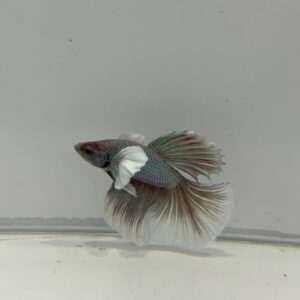
Assorted Betta Double Tail
Original price was: £19.99.£18.99Current price is: £18.99. Read more -
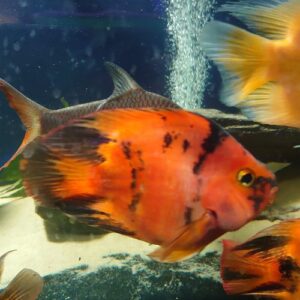
Red Tiger King Kong Parrot 4-5″
£109.99 Read more -
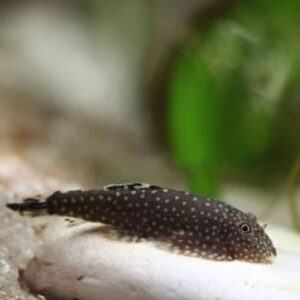
Spotted Hillstream Loach
Price range: £13.99 through £26.02 Select options This product has multiple variants. The options may be chosen on the product page -
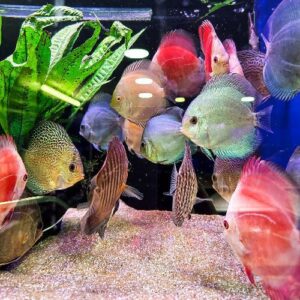
Assorted Discus Large
Price range: £74.99 through £120.00 Select options This product has multiple variants. The options may be chosen on the product page