

Sub-Total: £0.00
Heads up! Livestock sells out quickly — please give us a quick call before visiting to check availability.
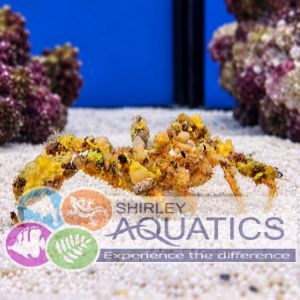
Decorator Crab
£16.99
Scientific name: Camposcia retusa (if this is the species supplied)
Common name: Decorator Crab / Spider Decorator Crab
Maximum size: Approximately 10cm including legs
Minimum aquarium: 100 litres recommended
Temperature: 23–27°C
pH: 8.1–8.4
Specific gravity: 1.023–1.026
Temperament: Generally peaceful but opportunistic
Diet: Omnivorous scavenger
Reef safe: With caution
Care level: Intermediate
Origin: Indo-Pacific
Activity: Mainly nocturnal
Best kept: Singly in a mature marine aquarium
Available on backorder
Description
Decorator Crab
The Decorator Crab is one of the most unusual and entertaining marine invertebrates available for the home aquarium. Rather than relying on bright colours or elaborate markings, these fascinating crabs disguise themselves by attaching pieces of algae, sponge and other materials to their bodies.
This remarkable camouflage helps them blend into their surroundings, often making them surprisingly difficult to spot among established rockwork.
Found throughout tropical marine environments, decorator crabs are fascinating scavengers with plenty of personality. However, their habit of collecting living material for camouflage means they are best suited to carefully planned marine aquariums rather than delicate reef displays.
Decorator Crab Set Up
A mature marine aquarium of approximately 100 litres or larger is recommended, depending on the species and adult size.
Provide plenty of established rockwork, caves and sheltered areas where the crab can explore and retreat during moulting.
Rockwork should be securely positioned, as these crabs are capable climbers and may disturb small decorations while moving around the aquarium.
Decorator Crab Behaviour
Decorator crabs are generally solitary, spending much of their time exploring rockwork in search of food and suitable camouflage materials.
Their most remarkable behaviour is their ability to attach pieces of algae, sponge and other organisms to specialised hooked hairs on their bodies.
Over time, an individual can become almost completely concealed beneath its collection of decorations.
Many are more active during the evening and overnight, although established specimens may also be seen exploring during daylight hours.
Tank Mates
Suitable companions include peaceful marine fish that are unlikely to prey upon crustaceans.
Avoid puffers, triggerfish and larger predatory wrasses, which may attack or eat the crab.
Small ornamental shrimps, snails and other vulnerable invertebrates may also be at risk from larger or particularly opportunistic specimens.
Keeping decorator crabs individually is generally recommended unless their species and compatibility are known.
Feeding
Decorator crabs are opportunistic omnivores and scavengers that consume a variety of marine foods.
Suitable foods include:
-
Marine algae and seaweed
-
Sinking marine pellets
-
Frozen mysis shrimp
-
Small pieces of mussel or prawn
-
Detritus and leftover fish food
-
Other suitable frozen marine preparations
A varied diet should be offered regularly rather than relying entirely on leftover food.
Are Decorator Crabs Reef Safe?
Reef safe with caution — often unsuitable for delicate reef aquariums.
Although decorator crabs do not necessarily consume healthy corals, they may remove pieces of soft coral, sponge, zoanthids or other attached organisms to use as camouflage.
Larger individuals may also disturb coral frags, dislodge small decorations or investigate vulnerable invertebrates.
For this reason, they are generally better suited to fish-only marine aquariums with live rock or reef systems where their decorating behaviour can be accommodated.
Water Parameters
Temperature: 23–27°C pH: 8.1–8.4 Specific gravity: 1.023–1.026 Alkalinity: Approximately 8–12 dKH
Stable water chemistry is essential, particularly during moulting.
Like other marine crustaceans, decorator crabs are sensitive to copper-based medications and sudden changes in salinity.
Care Level
Intermediate
Although many decorator crabs are relatively hardy once established, their opportunistic feeding habits and unpredictable decorating behaviour require careful consideration.
Provide suitable hiding places, regular feeding and stable water conditions.
Their unusual camouflage makes them particularly rewarding for aquarists who enjoy observing natural marine invertebrate behaviour.
This species is strictly for marine aquariums and must not be kept in freshwater (tropical or coldwater) or terrestrial environments, as they will not survive outside of saltwater conditions.
If you have any questions about keeping this crab , please contact us and a member of our friendly store team will be more than happy to answer all of your questions and advise on best practice.
Why not check out our Instagram for the latest news on our products and livestock!