

Sub-Total: £0.00
Heads up! Livestock sells out quickly — please give us a quick call before visiting to check availability.
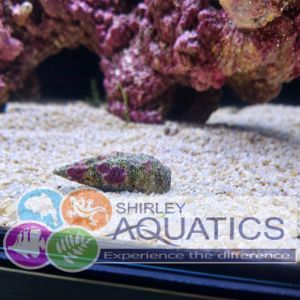
Cerith Snail
Price range: £2.49 through £63.53
Scientific name: Cerithium spp.
Common name: Cerith Snail
Maximum size: Typically 2.5–5cm, depending on species
Temperature: 23–27°C
pH: 8.1–8.4
Specific gravity: 1.023–1.026
Temperament: Peaceful
Diet: Omnivorous grazer / scavenger
Reef safe: Yes
Care level: Easy
Aquarium area: Rockwork, glass and substrate
Best kept in: Mature marine aquariums with rockwork and a sand bed
Description
Cerith Snail
The Cerith Snail (Cerithium spp.) is a peaceful, reef-safe marine snail and an excellent addition to a clean-up crew. These small, hardworking snails spend their time grazing across rockwork, glass and substrate, feeding on algae, biofilm, detritus and uneaten food.
Cerith Snails are particularly useful because they don’t restrict themselves to hard surfaces. They regularly burrow into the substrate, helping to gently disturb the upper layers of the sand bed while searching for food. They are often most active after the aquarium lights go out, so don’t be surprised if yours disappears into the sand during the day.
Set Up
Ceriths are best kept in an established marine aquarium containing plenty of mature rockwork and a sand substrate.
A mature aquarium is important because much of their diet comes from naturally occurring algae, biofilm and organic material. Very new or exceptionally clean aquariums may simply not contain enough natural food to support a large clean-up crew.
A sandy substrate is strongly recommended. Ceriths naturally burrow and forage through the upper layers, making them particularly useful in areas that many other grazing snails ignore.
Cerith Snail Behaviour
Cerith Snails are completely peaceful and spend most of their time searching for food.
They may be seen grazing over aquarium glass, rocks and the sand surface before disappearing underneath the substrate. They can be particularly active at night, so a Cerith that hasn’t been visible during the day isn’t necessarily missing.
Their burrowing behaviour also gently turns the upper surface of the sand as they move through it.
Cerith Snail Tank Mates
Ceriths are reef safe and suitable for aquariums containing corals and other peaceful marine invertebrates.
They can be kept alongside most peaceful reef fish and make an excellent component of a mixed clean-up crew alongside other suitable snails, shrimps and hermit crabs.
Avoid keeping them with livestock likely to prey upon snails, including some puffers, larger predatory wrasses and other snail-eating species.
As with any clean-up crew, don’t simply add large numbers based on aquarium volume. The aquarium needs to produce enough natural food to support them.
Feeding Cerith Snails
Cerith Snails are omnivorous scavengers and algae grazers.
They naturally feed on:
- Film algae
- Diatoms
- Biofilm
- Detritus
- Uneaten fish food
- Decaying organic matter
In a mature aquarium they will normally find much of their food naturally.
If the aquarium is particularly clean or natural algae becomes scarce, their diet can be supplemented with suitable algae-based sinking foods or small amounts of marine food.
Never use copper-based medication in an aquarium containing Cerith Snails or other marine invertebrates.
Cerith Snail Care Level
Easy
Ceriths are hardy by marine-invertebrate standards and are suitable for newer marine fishkeepers once the aquarium itself is mature and stable.
Their main requirements are good water quality, stable salinity and enough natural food to graze.
They’re also very low maintenance. Give them suitable conditions and they’ll quietly get on with cleaning parts of the aquarium you’d rather not clean yourself.
Why Add Ceriths to Your Clean-Up Crew?
Cerith Snails are one of those livestock choices that earn their keep without attracting much attention.
They graze algae from hard surfaces, scavenge leftover food and detritus and forage through the upper layers of the sand. Their relatively small size also allows them to reach areas of the rockwork that larger clean-up crew snails may struggle with.
Rather than relying on one species to do everything, Ceriths work particularly well as part of a varied marine clean-up crew, with different species tackling different areas of the aquarium.
If you have any questions about keeping Cerith Snails , please contact us and a member of our friendly store team will be more than happy to answer all of your questions and advise on best practice.
Why not check out our Instagram for the latest news on our products and livestock!
Additional information
| Multibuy | 16 For, 32 For, 4 For, 8 For, Each |
|---|