

Sub-Total: £0.00
Heads up! Livestock sells out quickly — please give us a quick call before visiting to check availability.
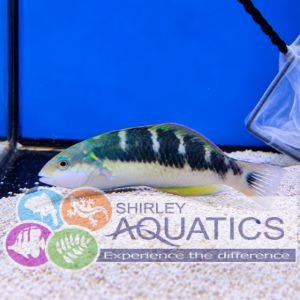
Sixbar Wrasse
£29.99
Scientific name: Thalassoma hardwicke
Common name: Sixbar Wrasse / Sixband Wrasse
Maximum size: Approximately 20cm
Minimum aquarium: 400 litres recommended
Temperature: 23–27°C
pH: 8.1–8.4
Specific gravity: 1.023–1.026
Temperament: Semi-aggressive, increasingly territorial with maturity
Diet: Carnivore
Reef safe: With caution – may eat ornamental invertebrates
Care level: Intermediate
Origin: Indo-Pacific
Best kept: Singly with robust marine fish
Special requirements: Spacious aquarium, secure lid and established rockwork
Available on backorder
Description
Sixbar Wrasse – Thalassoma hardwicke
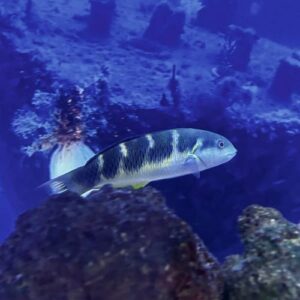
The Sixbar Wrasse (Thalassoma hardwicke), also known as the Sixband Wrasse, is a colourful and energetic marine fish recognised by its distinctive dark vertical bands, greenish-blue body and attractive pink and orange markings.
Native to the Indo-Pacific, this active wrasse inhabits coral reefs and rocky coastal environments, where it spends much of its day searching for small crustaceans and other invertebrates.
Reaching approximately 20cm, it makes an eye-catching addition to a spacious marine aquarium. However, its energetic behaviour and increasingly assertive temperament mean it is best suited to aquariums containing similarly confident fish.
Sixbar Wrasse Set Up
A mature marine aquarium of at least 400 litres is recommended, with plenty of open swimming space.
Provide established live rock arranged into caves, crevices and sheltered areas. These offer security while encouraging natural exploration and foraging behaviour.
Unlike many sand-burying wrasses, this species generally seeks shelter among rockwork at night rather than burying itself in the substrate.
A secure, tightly fitting aquarium lid is essential, as Sixbar Wrasses are powerful swimmers and capable jumpers.
Sixbar Wrasse Behaviour
This species is extremely active, inquisitive and constantly on the move.
Throughout the day, it patrols the aquarium, investigating rockwork and searching for small invertebrates.
Juveniles are often relatively peaceful, but adults can become increasingly territorial and may harass smaller or more timid tank mates.
Colouration can also change as individuals mature, with adult males often developing more intense markings.
In most home aquariums, keeping a single specimen is the safest approach.
Tank Mates
Suitable companions include robust marine fish such as larger clownfish, tangs, rabbitfish and other confident species capable of coping with an energetic wrasse.
Avoid very small, timid or slow-moving fish, which may become stressed by its persistent activity.
Other wrasses, particularly those with similar body shapes or feeding habits, may also experience territorial aggression.
Careful consideration should be given to ornamental invertebrates, as this species is an enthusiastic hunter.
Feeding
The Sixbar Wrasse is a carnivore that naturally feeds on small crustaceans, worms, molluscs and other marine invertebrates.
Suitable aquarium foods include:
-
Frozen mysis shrimp
-
Enriched brineshrimp
-
Chopped mussel and prawn
-
Krill
-
Quality marine carnivore pellets
-
Other suitable frozen marine preparations
Offer a varied diet, ideally divided into two or more meals daily.
Once established, this species is usually an enthusiastic feeder and readily accepts a wide selection of prepared foods.
Is the Sixbar Wrasse Reef Safe?
Reef safe with caution.
This species does not normally feed on healthy corals, making it potentially suitable for reef aquariums containing robust fish and securely positioned corals.
However, it may prey upon ornamental shrimps, small crabs, snails, feather duster worms and other desirable invertebrates.
Larger specimens are particularly capable of hunting crustaceans.
For aquarists wishing to maintain a diverse clean-up crew or ornamental shrimp collection, a more peaceful wrasse would generally be a better choice.
Water Parameters
Temperature: 23–27°C pH: 8.1–8.4 Specific gravity: 1.023–1.026 Alkalinity: Approximately 8–12 dKH
Stable water chemistry, efficient filtration and good oxygenation are important for this highly active species.
Care Level
Intermediate
The Sixbar Wrasse is generally hardy and adaptable once established, but its eventual size, energetic swimming behaviour and potential aggression make it unsuitable for smaller community aquariums.
A spacious aquarium, secure lid and carefully selected tank mates are essential.
For experienced marine fishkeepers with a suitable system, this colourful and constantly active wrasse can make a fascinating centrepiece.
This species is strictly for marine aquariums and must not be kept in freshwater (tropical or coldwater) or terrestrial environments, as they will not survive outside of saltwater conditions.
If you have any questions about keeping this fish , please contact us and a member of our friendly store team will be more than happy to answer all of your questions and advise on best practice.
Why not check out our Instagram for the latest news on our products and livestock!
Additional information
| Fish Type | Wrasse |
|---|