

Sub-Total: £0.00
Heads up! Livestock sells out quickly — please give us a quick call before visiting to check availability.
Dwarf Chain Loach
Price range: £14.99 through £99.59
- Scientific name: Ambastaia sidthimunki
- Common name: Dwarf Chain Loach / Dwarf Loach
- Maximum size: Approximately 5–6cm
- Temperature: 24–28°C
- pH: 6.0–7.5
- Minimum aquarium: 100 litres, preferably 80cm or longer
- Temperament: Peaceful to moderately boisterous; highly social
- Diet: Omnivorous – sinking pellets, live and frozen foods
- Care level: Moderate
- Origin: Thailand
- Compatibility: Peaceful, active community fish
- Group size: Minimum 6, preferably 8–10 or more
- Special requirements: Smooth substrate, plenty of shelter and well-oxygenated water
Description
Dwarf Chain Loach – Ambastaia sidthimunki
The Dwarf Chain Loach (Ambastaia sidthimunki) is a small, active and beautifully patterned freshwater fish, recognised for its distinctive chain-like markings and entertaining personality. Native to Thailand, this fascinating species is one of the smallest loaches commonly available in the aquarium hobby.
Unlike many bottom-dwelling loaches, Dwarf Chain Loaches are particularly active during daylight hours. They frequently explore the entire aquarium, swimming through plants, investigating decorations and interacting with other members of their group.
Their manageable adult size and lively behaviour make them an excellent choice for well-maintained tropical community aquariums.
Dwarf Chain Loach Care and Aquarium Requirements
Although small, these energetic fish require plenty of swimming space and should always be maintained in groups.
An aquarium of at least 100 litres is recommended, preferably measuring 80cm or more in length. Larger aquariums are beneficial when keeping bigger groups.
Provide fine sand or smooth gravel, alongside driftwood, rounded rocks, caves and dense planting. Multiple hiding places allow individual fish to retreat and help prevent territorial disputes.
Maintain temperatures between 24–28°C and a pH of approximately 6.0–7.5.
Good filtration, clean water and adequate oxygenation are particularly important for this active species.
Temperament and Social Behaviour
Dwarf Chain Loaches are highly social fish that should be kept in groups of at least six, although eight to ten or more is preferable.
Within a group, they establish a natural hierarchy and regularly interact through chasing, displaying and playful behaviour.
Although generally peaceful, they can be surprisingly boisterous for their size. Maintaining a sufficiently large group helps distribute attention between individuals and encourages natural behaviour.
Unlike many nocturnal loaches, these fish are frequently visible throughout the day, making them particularly entertaining to observe.
Suitable Aquarium Tank Mates
These little loaches are best maintained alongside peaceful but reasonably active community fish.
Suitable companions include:
- Small and medium-sized Tetras
- Rasboras
- Peaceful Barbs
- Rainbowfish
- Other suitable community fish
Avoid aggressive species, very timid fish and slow-moving tank mates with delicate fins.
Their energetic behaviour can occasionally disturb particularly shy species.
Dwarf Chain Loach Feeding and Diet
Dwarf Chain Loaches are omnivorous and readily accept a varied selection of aquarium foods.
Suitable foods include:
- Quality sinking pellets and granules
- Frozen or live Bloodworm
- Brine Shrimp
- Daphnia
- Small aquatic invertebrates
- Suitable vegetable-based foods
They are also enthusiastic snail hunters and may help reduce populations of small pest snails.
However, snails should only form part of a varied diet, and these fish should not be purchased solely for snail control.
Appearance and Colouration
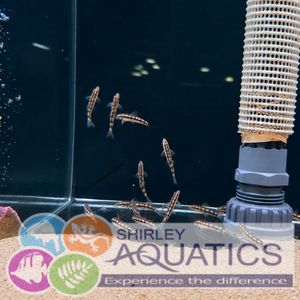
The most distinctive feature of this species is its unusual chain-like pattern.
Dark horizontal markings run along the body, connected by irregular vertical bars to create a pattern resembling a series of linked chains.
The pale cream or golden background provides an attractive contrast, while the fins are generally transparent.
Adults usually reach around 5–6cm, making them considerably smaller than most other commonly kept loach species.
Breeding Dwarf Chain Loaches
Breeding in ordinary home aquariums is extremely uncommon.
Although commercial breeding has been achieved using specialised techniques, natural spawning in captivity is rarely documented.
Distinguishing between males and females can also be difficult, although mature females may develop fuller bodies.
A Small Loach with a Big Personality
With their distinctive markings, lively behaviour and fascinating social interactions, Dwarf Chain Loaches make wonderful additions to suitable tropical aquariums.
Their small adult size makes them particularly appealing, although their need for companionship and swimming space should never be underestimated.
When maintained in a generous group with plenty of shelter, these charming little fish provide constant activity and entertainment.
Please note that the image is for illustration purposes and the fish you will receive may not be identical. These fish are still juveniles and have yet to colour up. A healthy environment and good quality food will help bring them into full colour. If you have any questions about keeping these fish, please don’t hesitate to ask a member of staff.
Why not check out our YouTube channel for the latest updates on our fish tanks, livestock and many more!
Additional information
| Multibuy | 2 For, 4 For, 8 For, Each |
|---|
Related products
-

Alenquer Tiger Pleco L397
£69.99 Read more -
Sale!
Siamese Algae Eater
Price range: £3.89 through £27.50 Select options This product has multiple variants. The options may be chosen on the product page -
Assorted Discus
Price range: £61.99 through £110.00 Select options This product has multiple variants. The options may be chosen on the product page -
Red Oscar 5-6cm
Price range: £12.49 through £43.68 Select options This product has multiple variants. The options may be chosen on the product page