

Sub-Total: £0.00
Heads up! Livestock sells out quickly — please give us a quick call before visiting to check availability.
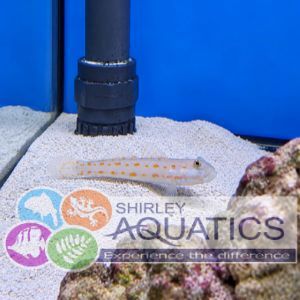
Orange Spot Goby
£26.99
Scientific name: Valenciennea puellaris
Common name: Orange Spot Goby / Diamond Watchman Goby
Maximum size: Approximately 15cm
Minimum aquarium: 200 litres recommended
Temperature: 23–27°C
pH: 8.1–8.4
Specific gravity: 1.023–1.026
Temperament: Peaceful, territorial towards similar gobies
Diet: Carnivore / sand-sifting microfauna feeder
Reef safe: Yes
Care level: Intermediate
Origin: Indo-Pacific
Special requirements: Fine sand, secure rockwork and a covered aquarium
Best kept: Singly or as an established pair
Available on backorder
Description
Orange Spot Goby
The Orange Spot Goby (Valenciennea puellaris), also known as the Diamond Watchman Goby or Orange Spotted Sleeper Goby, is an attractive marine fish recognised by its pale body, bright orange spots and distinctive sand-sifting behaviour.
Native to the Indo-Pacific, this peaceful bottom-dwelling species spends much of its day taking mouthfuls of sand, filtering out tiny organisms and expelling the cleaned substrate through its gills.
Reaching approximately 15cm, it makes a fascinating addition to a mature marine aquarium, helping to turn over the sand bed while displaying plenty of natural character.
Orange Spot Goby Set Up
A mature marine aquarium of at least 200 litres is recommended, with a generous area of open sand.
A fine, soft sand substrate is essential, allowing the goby to sift naturally without damaging its mouth or gills. Coarse gravel and sharp substrates should be avoided.
Provide established rockwork with caves and sheltered areas where the fish can retreat. Rock structures should be securely positioned on the aquarium base rather than resting loosely on the sand, as burrowing activity can undermine unstable decorations.
A tightly fitting lid or mesh cover is also important, as these gobies are capable jumpers.
Orange Spot Goby Behaviour
This species is peaceful, active and particularly entertaining to observe.
Much of its day is spent collecting mouthfuls of sand and filtering out edible organisms. This constant activity helps keep the upper layers of the substrate turned over, although it may occasionally create small piles of sand around its favourite burrow.
Once established, individuals often develop a preferred territory and spend much of their time working the surrounding sand bed.
They can be territorial towards other sand-sifting gobies, although established pairs may live together successfully.
Tank Mates
Suitable companions include peaceful marine fish such as clownfish, blennies, cardinalfish, fairy wrasses and other community species.
Avoid aggressive bottom-dwelling fish that may compete for territory or prevent the goby from feeding.
Keeping more than one is generally best reserved for a compatible pair, as unrelated individuals may become territorial.
Feeding
The Orange Spot Goby is a carnivore that naturally feeds on tiny crustaceans, worms and other organisms found within the sand.
Suitable aquarium foods include:
-
Frozen mysis shrimp
-
Enriched brineshrimp
-
Copepods
-
Finely chopped marine seafood
-
Small sinking marine pellets
-
Quality frozen marine carnivore preparations
Although this species constantly sifts sand, natural food within the substrate is rarely sufficient on its own.
Supplementary feeding is essential, particularly in newer or exceptionally clean aquariums. Ensure food reaches the bottom and that the goby is receiving enough to maintain a healthy body condition.
Is the Orange Spot Goby Reef Safe?
Yes.
This species does not normally feed on corals and is generally suitable for established reef aquariums.
However, its enthusiastic sand-sifting can occasionally scatter substrate over corals positioned close to the sand bed.
Small coral frags and delicate bottom-dwelling corals should therefore be positioned carefully.
Water Parameters
Temperature: 23–27°C pH: 8.1–8.4 Specific gravity: 1.023–1.026 Alkalinity: Approximately 8–12 dKH
Stable water chemistry, good filtration and adequate oxygenation are important for long-term health.
Care Level
Intermediate
Although peaceful and generally hardy once established, this species requires a mature aquarium with suitable sand and a reliable food supply.
Sand-sifting gobies can gradually lose condition if they are unable to obtain sufficient nutrition, even when they appear to be actively feeding throughout the day.
Regular supplementary feeding and monitoring body condition are therefore particularly important.
This species is strictly for marine aquariums and must not be kept in freshwater (tropical or coldwater) or terrestrial environments, as they will not survive outside of saltwater conditions.
If you have any questions about keeping this fish , please contact us and a member of our friendly store team will be more than happy to answer all of your questions and advise on best practice.
Why not check out our Instagram for the latest news on our products and livestock!